
B2B ecommerce built around how your business sells
Madcraft Commerce brings strategy, UX and B2B ecommerce development together to handle complex products, account pricing, quotes, orders and service workflows, connected to the systems that run your business.
Trusted by Leading Industrial & B2B Organizations


Proven outcomes from a complex B2B commerce transformation
Customer self-service
Pricing, inventory and order visibility
Connected to ERP, CRM and product data
When ecommerce does not fit the business
Many B2B ecommerce platforms look polished but break down around operating requirements. Buyers still email for quotes, sales teams correct pricing by hand and operations reenter orders because the storefront, ERP, product data and service workflows never connect.

Buyers Struggle to Find Products
Large catalogs, technical attributes and inconsistent data make products, parts and compatible options difficult to identify.

Pricing Lives Outside Ecommerce
Contract pricing, discounts, terms and product eligibility live across spreadsheets, inboxes and the ERP.

Quotes and Orders Stay Manual
Sales teams rekey quotes, purchase orders and customer details across systems, adding delays and avoidable errors.

Complex Customer Accounts Get Oversimplified
Multi-location buyers, account hierarchies, approval rules and purchasing roles are forced into a consumer-style checkout.

Systems Fall Out of Sync
Inventory, product, customer and order data drift apart when integrations are slow, fragile or incomplete.

Checkout Cannot Handle B2B
Standard carts cannot support bulk ordering, purchase orders, approvals, negotiated terms, job sites or complex fulfillment.

The Platform Cannot Scale
Every new market, catalog, brand or service workflow requires another workaround, increasing cost and slowing the business down further.
Let’s build a commerce platform buyers use and your teams operate with confidence.
One commerce platform, from strategy through optimization
Every layer is designed around your customers, commercial rules and operating systems, from product discovery and account pricing through ordering, fulfillment, service and continuous growth.
-
1
Commerce Strategy & Platform Selection
Define commercial goals, buyer needs, operating requirements, platform fit, investment and roadmap.
-
2
B2B Buyer Journeys
Map how each customer finds products, sees pricing, requests quotes, orders, reorders and receives service.
-
3
Product, Pricing & Catalog Architecture
Structure products, SKUs, attributes, catalogs, contracts and price rules so buyers see the right offer.
-
4
Quotes, Orders & Account Workflows
Design ordering, quoting, approvals, purchase orders, credit terms, reordering and account management around buying behavior.
-
5
ERP, CRM, PIM & Service Integrations
Connect product, customer, pricing, inventory, order, fulfillment and service data through reliable APIs and middleware.
-
6
Custom Development & Headless Commerce
Build tailored storefronts, platform extensions and middleware without compromising usability, maintainability, security or long-term performance.
-
7
Launch, Adoption & Managed Optimization
Pilot with real customers, train internal teams, measure adoption and continuously improve conversion, performance and operational value.
Better buying. Less work. More scalable growth.
- Find the right products faster
- See negotiated pricing and live availability
- Request quotes or place complex orders
- Reorder, track and manage accounts online
- Access parts, service and documentation
- Reduce order entry and pricing corrections
- Keep product, customer and order data aligned
- Preserve commercial rules and approval controls
- Launch markets and storefronts more efficiently
- Measure adoption, conversion and digital revenue
Buyers get an easier way to buy. Teams remove repetitive work. The business gains a scalable channel for revenue, service and retention.
A clear path from complexity to commerce
Discover and Align
Define buyers, commercial goals, operational constraints, service needs, adoption priorities and measurable success criteria.
Select & Architect
Select the platform and design the journeys, architecture, data ownership, integrations, governance and delivery roadmap.
Prototype & Validate
Prototype and test product discovery, pricing, quoting, ordering and account workflows with real customers early.
Build and Integrate
Implement the platform, migrate product data, connect core systems and validate security, performance and accuracy.
Launch and Improve
Launch with pilot accounts, train teams, measure adoption and continuously optimize conversion, workflows and platform performance.
Building a global B2B commerce engine for construction
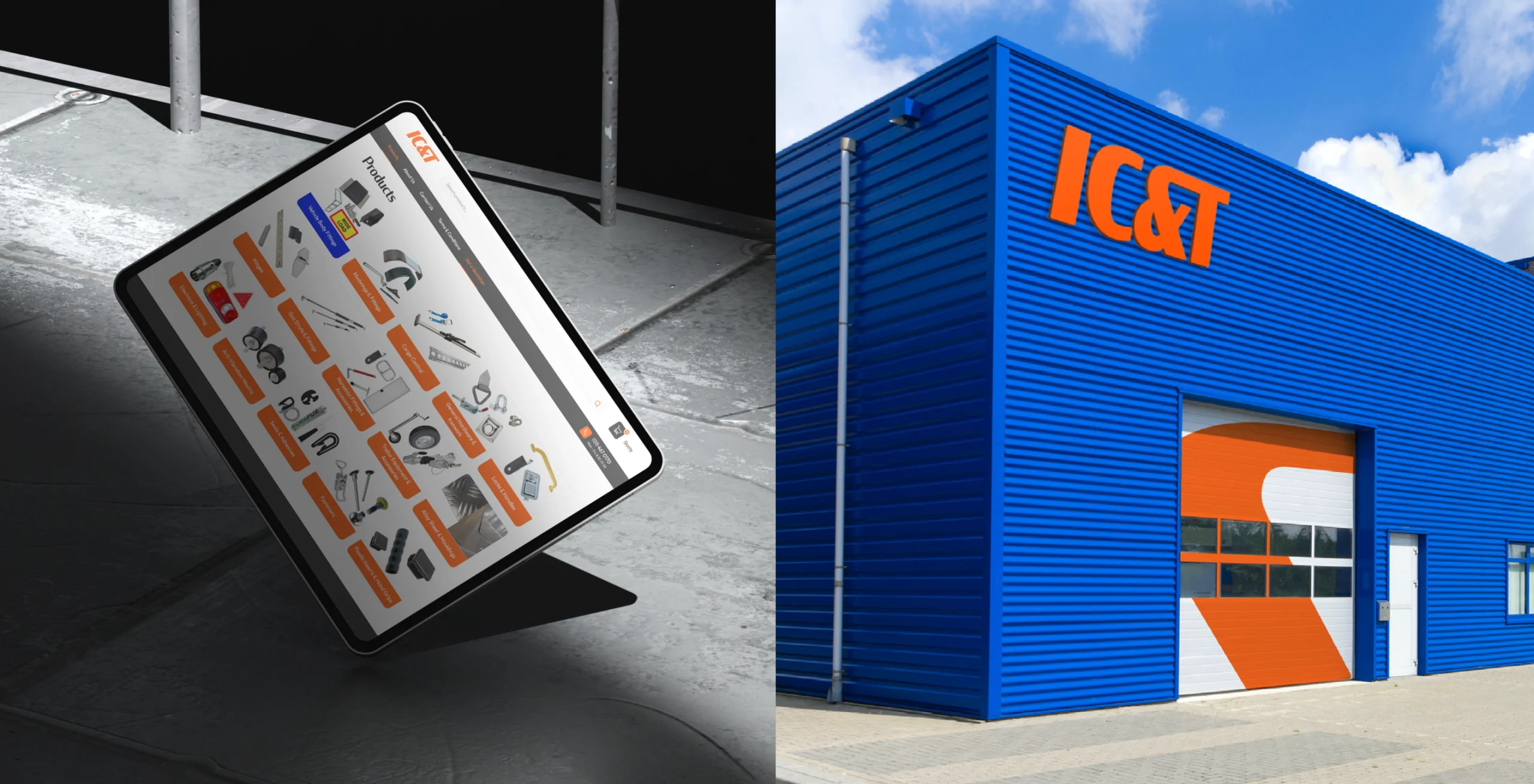

I.C. & T. Supplies Ltd., a leading distributor of coachbuilding, trailer and equipment supplies, had never had a website. Madcraft designed and built a custom, mobile-first WordPress site that showcases its full product range and replaces the traditional checkout with a “Get a Quote” system connected to its CRM, so visitor interest turns into sales-ready enquiries.
1st
website in the company’s history, built to turn visits into quotes
“I.C. & T. didn’t need a shop, they needed a sales tool. Swapping checkout for a quote-led journey meant every visit could become a real conversation with their team.”
01. The Challenge
With no online presence, a growing product range had no showcase, and a standard eCommerce checkout didn’t fit how the business actually quotes and sells.
02. The Platform Need
The business needed fast, SEO-friendly pages, easy content management for the team, clear product categories and direct integration with its CRM and lead systems.
03. The Transformation
Madcraft delivered a custom WordPress theme with reusable Gutenberg blocks, a “Get a Quote” system, CRM integration and mobile-first, performance-optimised templates.
B2B ecommerce and service platforms for complex industries
Give customers and distributors account pricing, technical product data, inventory, bulk ordering, reordering, parts access and connected service workflows online.
Explore Manufacturing
Help contractors and project teams buy against job-specific pricing, confirm availability, schedule deliveries and manage documentation across active sites.
Explore Construction & Infrastructure
Enable clients to purchase technical products, subscriptions, field services and renewals through clear, account-based workflows online.
Explore Engineering & Technical Services
Connect equipment sales, compatible parts, serial-specific catalogs, warranties, maintenance plans and service scheduling within one commerce experience.
Explore Industrial Equipment & Machinery
Give dealers and contractors accurate specifications, account pricing, availability, quotes, orders and job-specific delivery options.
Explore Building Products & Materials
Support controlled purchasing of equipment, parts and services with contract pricing, compliance documentation, approvals and reliable account-level data.
Explore Energy, Utilities & Environmental Services
Handle large catalogs, negotiated pricing, bulk orders, multi-location accounts, inventory, approvals, invoices and rapid reordering online.
Explore Distribution, Wholesale & Supply Chain
Sell equipment, licenses, subscriptions and managed services through account catalogs, contract terms, renewals and connected support workflows.
Explore Technology, Communications & Security
B2B ecommerce implementation questions, answered
What is a B2B ecommerce and service platform?
A B2B ecommerce platform lets business customers find products, see account-specific pricing, request quotes, place orders and manage ongoing service online. Unlike a consumer store, it can support company accounts, purchasing roles, payment terms, approvals, bulk ordering, repeat purchasing, technical product data and connections to the systems running the business.
Which ecommerce platform is right for our B2B business?
The right choice depends on your commercial model, product complexity, internal systems, growth plans and operating team. BigCommerce, Adobe Commerce and Shopify Plus each suit different requirements. A custom platform may be appropriate where workflows cannot fit standard products. We assess the business first, then recommend the architecture with the strongest long-term fit.
Which B2B commerce platforms can Madcraft implement?
Madcraft implements BigCommerce, Adobe Commerce, Shopify Plus and custom commerce solutions, including headless storefronts and middleware. We are platform-informed, not platform-led. The recommendation depends on required workflows, integrations, administration, total cost and future roadmap. Where a platform is already selected, we validate the fit and design the implementation around it for long-term operational value.
How do you handle account-specific pricing and catalogs?
We map pricing rules, customer agreements, product eligibility, regions, currencies and volume breaks before configuration begins. The platform can then present the appropriate catalog, price, terms and checkout options to each company or location. We also define ownership and governance so commercial rules remain accurate as customers, products and agreements change over time.
Can the platform connect with our ERP, CRM, PIM and service systems?
Yes. Madcraft designs integrations across ERP, CRM, PIM, DAM, inventory, logistics, finance, payments and service systems. We define which platform owns each data point, how often it must synchronize and how failures are handled. Reliable system boundaries and monitoring are essential because commerce is only as accurate as the information behind it.
Can B2B ecommerce support quotes, purchase orders and approvals?
Yes. Depending on the platform and business rules, the experience can support request-for-quote, negotiated quotes, purchase orders, spending limits, approval chains, credit terms, saved lists and rapid reordering. We design those workflows around how customers already buy, while removing unnecessary steps that slow sales, operations or procurement teams.
How do you approach product data, search and complex catalogs?
We begin by understanding how buyers identify products, including SKUs, specifications, compatibility, use cases and industry language. From there, we define the catalog model, attributes, taxonomy, search behavior and data ownership. That creates a product experience buyers can navigate and an operating structure internal teams can maintain.
How do you make sure customers actually adopt the new platform?
Adoption starts with solving tasks customers genuinely need to complete. We involve representative buyers, test priority workflows and plan onboarding before launch. Pilot accounts, clear communications, training and internal account-team support help build momentum. After launch, we track activation, repeat orders, digital order share, task completion and customer feedback.
How long does B2B ecommerce implementation take, and what happens after launch?
A focused first release may take four to six months. Larger programs involving complex data, integrations, multiple markets, custom development or organizational change can take longer. We confirm the roadmap after discovery and technical validation. Following launch, Madcraft can provide managed support, performance monitoring, conversion optimization and a prioritized program of continuous improvement.


Build the B2B commerce channel your business needs
Talk with Madcraft about replacing fragmented ordering and service processes with a connected commerce platform designed around your buyers, commercial model and operating systems.