
Customer and dealer portals that make business easier
Madcraft designs and builds secure B2B portals that give customers, dealers and partners direct access to pricing, orders, documents and support, connected to the systems your teams already use.
Trusted by Leading Industrial & Enterprise Organizations


Proven outcomes from a complex B2B buyer portal
Improvement in order accuracy
Reduction in average fulfillment time
Reduction in manual order processing
When self-service still depends on your team
Many portals add a login without removing the work behind it. Customers still email for pricing, call for order updates and wait for documents, while sales, service and operations teams move the same information between disconnected systems.

Customers Still Call for Answers
Pricing, availability, order status, invoices and technical documents remain buried across inboxes, spreadsheets and internal systems.

Dealers Use Disconnected Tools
Partners move between separate systems for products, quotes, orders, warranties, marketing assets and support.

Orders Require Manual Reentry
Teams rekey purchase orders and account information, creating delays, avoidable errors and unnecessary administrative work.

Account Rules Are Hard to Manage
Contract pricing, catalogs, credit terms, territories and permissions are applied inconsistently or maintained by hand.

Product Information Is Difficult to Navigate
Customers cannot quickly find the right SKU, compatible part, specification, certificate or service information.

Self-Service Stops at Login
The portal displays information but does not let users complete the tasks they came to do.

Portal Adoption Remains Low
Customers return to email and phone because the digital experience is slower or less reliable than contacting a representative.
Let’s build a portal customers choose to use and your teams can trust.
One connected portal, from strategy through adoption
Every layer is planned around the real relationship between your customers, dealers and internal teams, from the first login through ordering, service and ongoing account growth.
-
1
Portal Strategy & Requirements
Define users, business outcomes, priority workflows, governance, investment and measurable success criteria.
-
2
Customer & Dealer Journeys
Map how each audience finds information, manages accounts, buys, requests service and works with your team.
-
3
UX, UI & Design System
Design clear, accessible experiences that make complex tasks feel familiar across desktop, tablet and mobile.
-
4
Commerce & Self-Service Workflows
Create ordering, reordering, quoting, approvals, invoices, support and account-management journeys around how your customers work.
-
5
Integrations & Data
Connect ERP, CRM, PIM, inventory, logistics, finance and support systems through reliable APIs and middleware.
-
6
Identity, Security & Governance
Implement SSO, MFA, role-based permissions, audit trails and controls appropriate to your data and users.
-
7
Adoption, Launch & Optimization
Pilot with real users, train teams, measure adoption and improve the workflows that create the most value.
Easier for customers. Better for your business.
- Find products and technical information faster
- See account-specific pricing and availability
- Order, reorder and track shipments anytime
- Access invoices, documents and support in one place
- Manage users, locations and approvals independently
- Reduce order entry and routine status requests
- Keep CRM, ERP, PIM and commerce data connected
- Give account teams visibility into buyer activity
- Apply pricing, permissions and workflows consistently
- Measure adoption, service demand and account growth
Customers get faster answers. Your teams remove repetitive work. The business gains a scalable digital channel for service, retention and growth.
A clear path from complexity to adoption
Discover and Align
Define portal users, business outcomes, service gaps, workflows, adoption goals and measurable success criteria.
Map & Architect
Map journeys, roles, permissions, data flows, integrations and the platform architecture required to support them.
Prototype & Validate
Design and test priority tasks with customers, dealers and internal teams before full development begins.
Build and Integrate
Develop the experience, connect core systems, migrate required data and validate security, performance and accuracy.
Launch and Improve
Pilot with selected users, train teams, measure adoption and continuously improve the workflows that create value.
Leviat
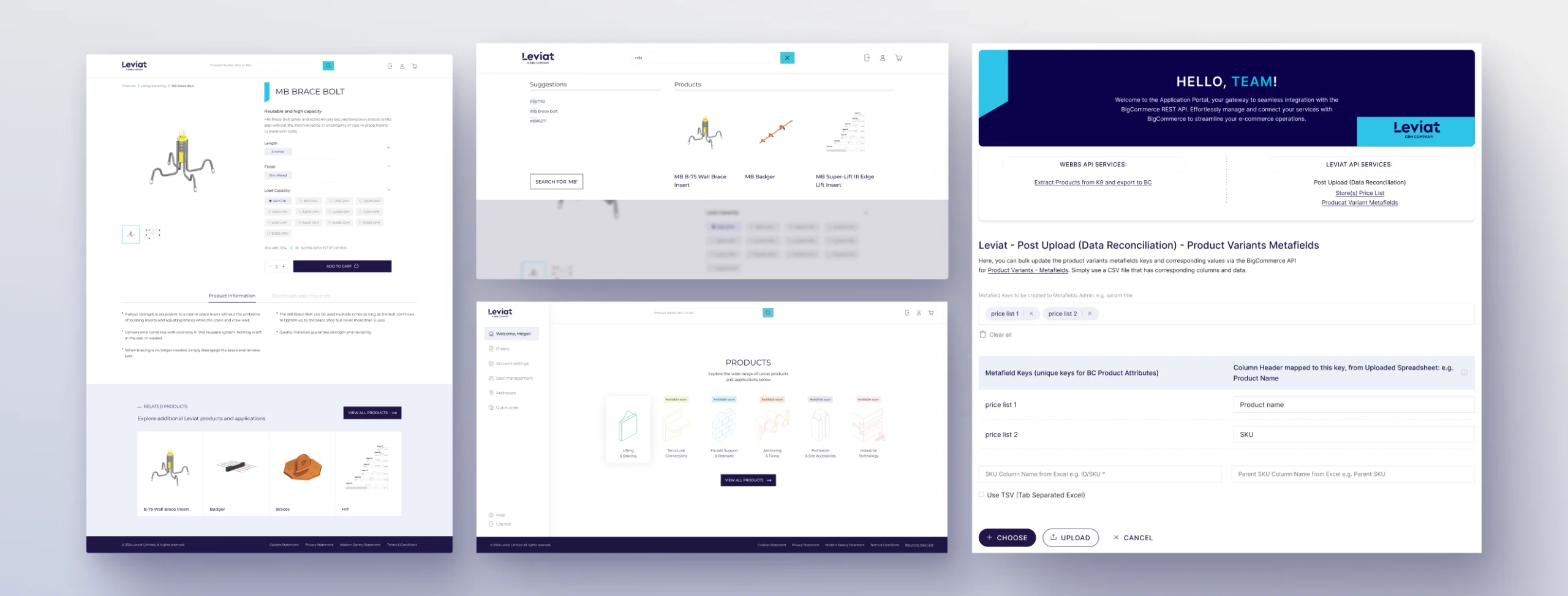
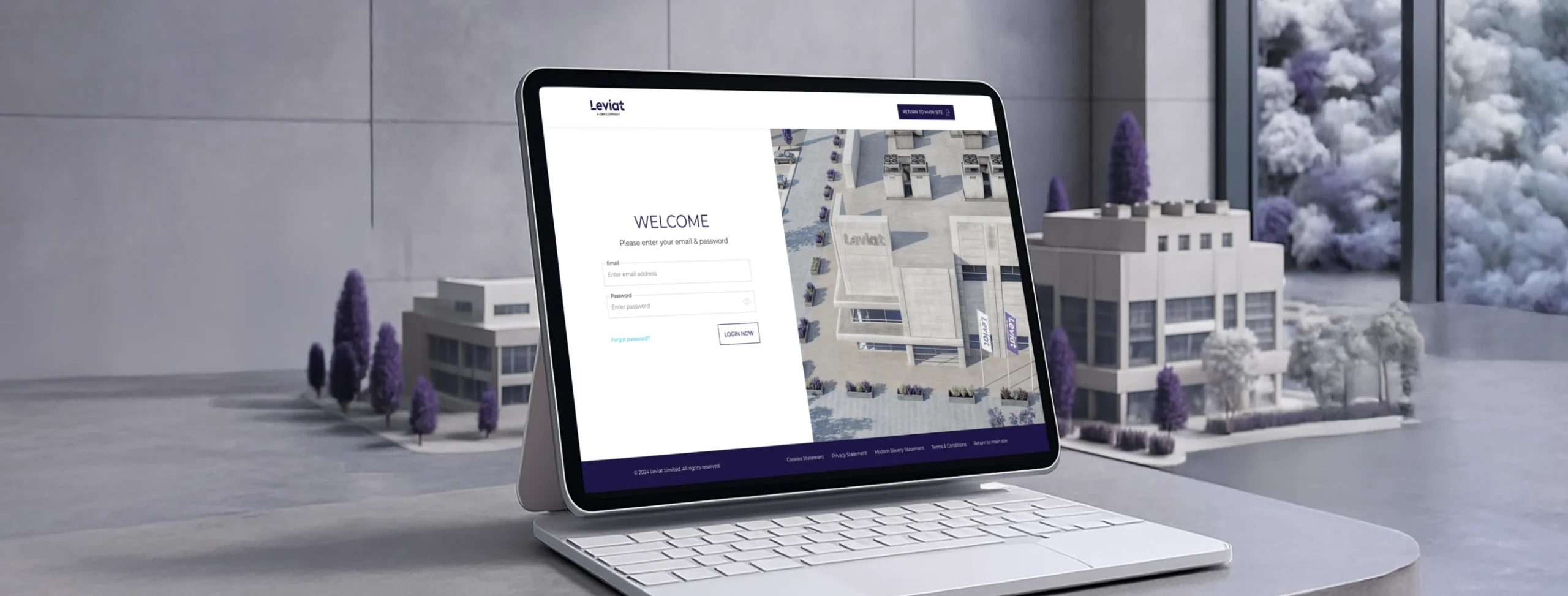
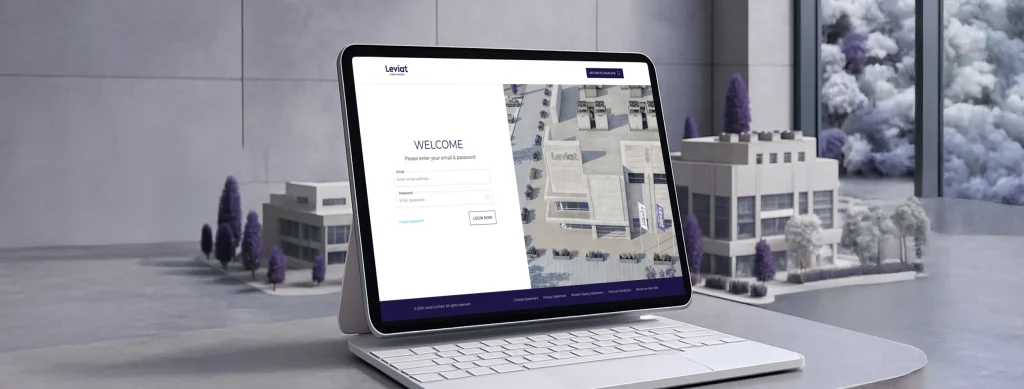
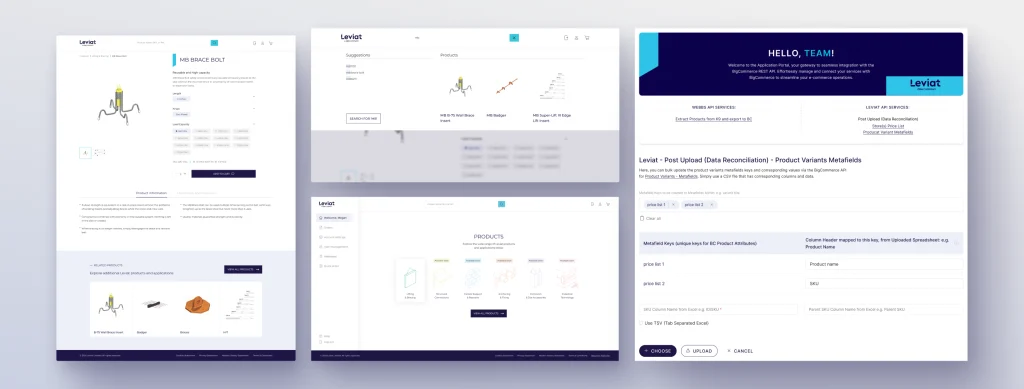
Leviat, part of the CRH group, wanted to give key construction customers in the United States a self-service way to find products, see contract pricing and manage orders. Madcraft designed and built a headless BigCommerce B2B portal connected to Microsoft Dynamics AX, bringing live inventory, order history, shipment tracking and one-click reordering into one secure experience.
95%
improvement in order accuracy since launch
“This project went far beyond putting a product catalogue online — it reimagined how construction professionals order, track and manage their supply chain.”
01. The Challenge
Orders relied on phone and email, with customers needing a faster way to access accurate product information, up-to-date pricing and live inventory data.
02. The Platform Need
Customers needed contract-specific pricing, live stock, searchable product data across hundreds of SKUs, multi-location delivery and reliable order visibility.
03. The Transformation
Madcraft delivered a headless BigCommerce portal with secure AWS middleware, Dynamics AX integration, Algolia-powered search and personalized buying workflows.
Customer and dealer portals for complex B2B industries
Give customers and distributors secure access to account pricing, technical product data, order status, certificates, service requests and repeat-order tools.
Explore Manufacturing
Help contractors, project teams and partners manage job-specific pricing, product availability, deliveries, documentation and service across active sites.
Explore Construction & Infrastructure
Create secure project and client environments for technical documents, approvals, service requests, collaboration and account-level reporting.
Explore Engineering & Technical Services
Make parts, serial-specific product information, warranties, maintenance records, service scheduling and dealer support available through one account.
Explore Industrial Equipment & Machinery
Connect specifiers, contractors and dealers with account pricing, specifications, inventory, quotes, orders and project documentation.
Explore Building Products & Materials
Provide controlled access to service information, compliance documents, project status, support requests and data across complex stakeholder groups.
Explore Energy, Utilities & Environmental Services
Give multi-location customers live inventory, negotiated pricing, bulk-order tools, order history, invoices, approvals and fast reordering.
Explore Distribution, Wholesale & Supply Chain
Centralize solution information, quotes, renewals, licenses, support cases, assets and partner resources within a secure, account-based experience.
Explore Technology, Communications & Security
Customer and dealer portal questions, answered
What is a B2B customer or dealer portal?
A B2B portal is a secure digital platform where authenticated customers, dealers or partners can access the information and complete the tasks relevant to their account. Depending on the business, that can include contract pricing, product catalogs, quotes, orders, invoices, technical documents, service requests, warranties, training and account management.
What is the difference between a customer portal and a dealer portal?
A customer portal primarily supports direct customers with account service, purchasing, documents and support. A dealer portal must also accommodate channel relationships, including territories, tiered pricing, product eligibility, lead distribution, marketing assets, warranties and training. Madcraft can support both audiences within one platform while applying the correct content, workflows and permissions to each.
Does a portal need to include ecommerce?
No. Some portals focus on information, documentation, service and collaboration without taking payment or processing orders. Others include complete B2B ecommerce, quoting, purchase orders, credit terms and invoicing. We define the right first release around the tasks that create the clearest value, then design the architecture so additional capabilities can be added over time.
Which portal features should we prioritize?
Start with the tasks that generate the most customer friction or internal work. These often include product discovery, account-specific pricing, inventory, order status, invoice access, document retrieval, reordering and service requests. We combine customer research, process mapping and operational data to decide what belongs in the first release and what should follow later.
Can the portal connect with our ERP, CRM and product systems?
Yes. Madcraft designs portal architectures that can connect with ERP, CRM, PIM, DAM, inventory, logistics, finance, identity and support platforms. We define which system owns each data point, how frequently it must update and what happens when a connection fails. That prevents the portal from becoming another disconnected source of information.
How are account-specific pricing, catalogs and permissions handled?
Each authenticated company can receive the experience agreed for that account. The portal can apply contract pricing, approved catalogs, payment terms, locations and workflows while supporting multiple users with different roles and approval rights. The final rules depend on your commercial model and the capabilities of the connected platforms.
How do you protect portal security and customer data?
Security is addressed across identity, architecture, development and operations. Depending on the requirements, this can include SSO, MFA, role-based access, encryption, audit trails, secure API design, environment controls, monitoring and documented release processes. We define the controls with your technology and compliance teams before implementation begins.
How do you make sure customers and dealers actually use the portal?
Adoption begins before design. We involve representative users, prioritize tasks worth returning for and test key workflows before development is complete. Launch planning can include pilot groups, onboarding, training, internal ownership and communication. After launch, we track activation, repeat use, completed tasks, support demand and user feedback to guide improvement.
How long does a portal project take, and what happens after launch?
A focused first release may take four to six months. Larger programs with complex integrations, data preparation, multiple markets or change-management requirements can take longer. We confirm the delivery plan after discovery. Following launch, Madcraft can provide support, monitoring, optimization and a roadmap for expanding features based on adoption and business value.


Build a portal customers choose to use
Talk with Madcraft about replacing manual service and ordering processes with a secure, connected portal designed around your customers, dealers and business systems.